
Paper towels are mainly made from wood pulp, recycled paper fibers, and water. Manufacturers may also use water-based adhesives, wet-strength resins, and other process chemicals to improve sheet strength, absorbency, softness, and ply bonding. The exact formula depends on the product, such as a recycled paper towel, a virgin-fiber kitchen towel, or an unbleached brown paper towel.
In most factories, wood chips or recovered paper are turned into pulp, cleaned and refined, formed into thin sheets, pressed, dried, embossed, perforated, and wound into rolls. Softwood fibers help improve strength, while hardwood fibers create a smoother and softer feel. Recycled fibers can reduce the need for virgin pulp, although they are generally shorter and may affect the final sheet performance.
Key Takeaways
- Paper towels are made from virgin wood pulp, recycled paper fibers, water, and selected additives.
- Softwood pulp supports tensile strength and sheet durability.
- Hardwood pulp contributes softness, smoothness, and a finer surface.
- Recycled fibers may come from office paper, newspapers, cardboard, and other recovered paper products.
- Water-based adhesives bond multiple plies together.
- Wet-strength chemicals help paper towels hold together during cleaning tasks.
- The manufacturing process includes pulping, cleaning, bleaching, forming, pressing, drying, embossing, and cutting.
- Unbleached paper towels usually keep the natural brown color of the pulp.
Materials Used in Paper Towels
Paper towel materials are selected according to the balance required between absorbency, strength, softness, thickness, and cost. A towel intended for wiping kitchen spills may require a different fiber mix from a commercial hand towel used in a busy restroom.
The main base material is cellulose fiber. Cellulose comes from wood or recovered paper and forms the structure of the sheet. Water is used throughout the production process to separate, transport, clean, and form the fibers. After the sheet is dried, small amounts of functional additives may remain in the paper or be used during converting.
| Material | Main function | Source |
|---|---|---|
| Virgin wood pulp | Strength, softness, sheet formation | Softwood and hardwood trees |
| Recycled paper fibers | Fiber content and resource efficiency | Office paper, newspapers, cardboard |
| Water | Pulp preparation and fiber distribution | Process water |
| Water-based adhesive | Bonds multiple plies | Synthetic or starch-based formulations |
| Wet-strength resin | Helps the sheet resist breaking when wet | Paper manufacturing additives |
| Air and texture | Supports absorbency and bulk | Embossing and sheet formation |
1. Virgin Wood Pulp
Virgin wood pulp is produced from newly harvested wood and has not been used in another paper product. It is widely used in paper towels because the fibers are relatively long, clean, and consistent. This gives manufacturers more control over sheet strength, softness, absorbency, and appearance.
Softwood trees such as pine and fir generally provide longer fibers. These fibers form a stronger network, which helps the towel resist tearing while you wipe a wet surface. Hardwood trees such as eucalyptus, birch, and oak generally provide shorter fibers. Shorter fibers create a smoother sheet and can improve softness and surface uniformity.
A paper towel manufacturer may blend both fiber types. A higher softwood content can support a stronger commercial towel, while a greater proportion of hardwood pulp can improve hand feel. The final ratio depends on the product specification, the intended application, and the desired balance between strength and softness.
2. Recycled Paper Fibers
Recycled paper fibers are recovered from previously used paper products. Depending on the recycling system and product requirements, these fibers may come from old office paper, newspapers, magazines, cardboard, or other recovered paper grades.
Recycled fibers are processed to remove ink, coatings, adhesives, staples, and other contaminants. They are then mixed with water and prepared for paper formation. Because recycling shortens cellulose fibers over time, recycled pulp may not provide the same strength as virgin pulp. For this reason, many paper towels use a blend of recycled and virgin fibers rather than relying on recycled content alone.
The choice depends on the towel’s intended setting. A recycled paper towel may be suitable for office washrooms, public facilities, restaurants, and general hand drying. A high-strength kitchen towel may use a larger share of virgin pulp to improve wet durability and absorbency.
3. Water-Based Adhesives and Resins
Water-based adhesives are used mainly when manufacturers bond two or more tissue plies. Multi-ply paper towels need enough bonding to stay together during dispensing and wiping, but the bond must not make the sheet stiff or reduce its ability to absorb liquid.
Wet-strength resins serve a different purpose. They help the cellulose fiber network resist separation when the towel becomes wet. Without suitable wet strength, a paper towel may break apart quickly during use. The amount and type of additive depend on whether the product is designed for light hand drying, kitchen cleaning, food-service use, or heavy-duty wiping.
Manufacturers control these additives carefully because too much adhesive or resin can affect softness, absorbency, flushability, compostability, or the converting process. Product development usually involves laboratory testing for dry strength, wet strength, water absorption, lint, basis weight, ply bonding, and sheet appearance.
How Paper Towels Are Made
Paper towels are made through two connected stages: paper production and converting. During paper production, wood pulp or recycled pulp is prepared and formed into a large tissue web. During converting, that web is embossed, laminated when necessary, perforated, cut, folded, or wound into the finished format.
The manufacturing line must maintain consistent fiber distribution, moisture, thickness, and roll tension. Small changes can affect how quickly the towel absorbs water, how easily it tears along the perforation, and whether the roll feeds correctly in a dispenser.
1. Pulping
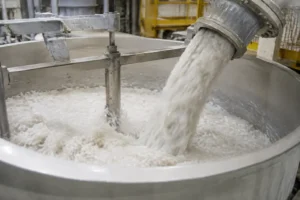
Pulping separates cellulose fibers from wood or recovered paper and suspends them in water. For wood-based products, logs or wood chips are processed to remove bark and prepare the material for chemical or mechanical pulping. The resulting pulp is washed and screened before it reaches the paper machine.
Recovered paper follows a different route. It is mixed with water in a pulper, where agitation breaks the paper into individual fibers. Screens and cleaning equipment remove plastics, metal, heavy particles, and other unwanted materials. In some products, de-inking equipment removes printing ink and improves brightness.
The pulp is then refined. Refining changes the fiber surface and improves the way fibers bond together. Operators adjust the refining level according to the product target. Excessive refining can produce a dense sheet with lower bulk, while insufficient refining can reduce strength and sheet uniformity.
1.1 Fiber Preparation
Fiber preparation influences the final paper towel more than the raw material label alone. A supplier may use the same broad fiber category but produce different results through changes in cleaning, refining, mixing, and moisture control.
The prepared pulp is diluted with water and blended in carefully controlled proportions. At this point, manufacturers can adjust the balance between softwood and hardwood fibers, add recycled content, and introduce approved functional additives. The goal is to create a stable furnish that forms evenly on the tissue machine.
2. Bleaching
Bleaching removes or reduces the natural color of wood and recycled pulp. Many white paper towels are treated with oxygen, hydrogen peroxide, or other bleaching compounds. Some systems may use chlorine-based chemistry under controlled industrial conditions, depending on the mill’s process and product requirements.
Bleaching does not create the paper towel’s basic structure. It primarily affects brightness, cleanliness, and visual consistency. White towels are commonly selected for kitchens, hotels, healthcare environments, restaurants, and washrooms because users can easily see dirt or moisture on the sheet.
Unbleached paper towels skip most or all whitening stages. These products retain a natural beige or brown appearance and are often made with kraft pulp or other naturally colored fibers. Color alone does not determine whether a towel is strong or absorbent. Performance depends on the fiber mix, basis weight, formation, drying method, and embossing design.
3. Drying and Pressing
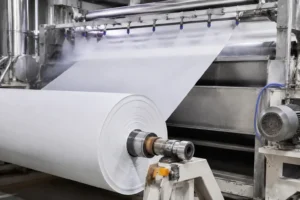
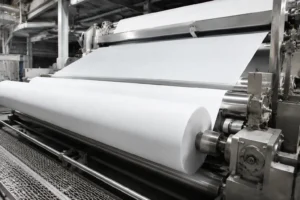
After pulp preparation, the diluted fiber suspension is distributed across a moving forming section. Water drains through a screen while the cellulose fibers collect into a thin, continuous web. The web must remain evenly distributed so the finished towel does not have weak spots, holes, or uneven absorbency.
Pressing removes part of the remaining water. The wet sheet then moves through a drying system, often involving a heated cylinder and a structured fabric. Controlled heat turns the wet fiber web into a dry tissue sheet. The drying process affects softness, bulk, stretch, and moisture content.
| Production stage | What happens | Effect on the finished towel |
|---|---|---|
| Pulp preparation | Fibers are separated, cleaned, and blended | Controls consistency and fiber quality |
| Sheet forming | Fibers are deposited onto a moving screen | Determines formation and uniformity |
| Pressing | Water is removed mechanically | Influences density and strength |
| Drying | Heat removes remaining moisture | Affects softness and bulk |
| Embossing | Texture is pressed into the sheet | Improves bulk, grip, and liquid handling |
| Perforating | Tear points are created | Controls sheet separation |
| Winding or folding | Sheets are converted into saleable formats | Determines pack and dispenser compatibility |
4. Embossing and Cutting
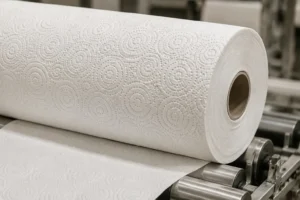
Embossing presses a pattern into the tissue sheet. The pattern can increase bulk, improve hand feel, create space for liquid, and help multiple plies remain aligned. Common patterns include dots, diamonds, waves, and brand-specific designs.
Embossing must be controlled carefully. A deeper pattern may increase thickness and improve the towel’s grip, but it can also reduce the smooth contact area or weaken the sheet if the pressure is too high. The best pattern depends on the product’s basis weight, number of plies, fiber mix, and intended use.
After embossing, the paper is perforated into individual sheets and wound onto cardboard cores. Some products are folded into interfolded, multifold, or Z-fold formats for wall-mounted or countertop dispensers. During converting, operators check roll diameter, sheet count, perforation quality, ply bonding, and packaging accuracy.
How Fiber Choice Changes Paper Towel Performance
Fiber choice affects what you experience when you lift, tear, wet, and use a paper towel. A long-fiber structure typically supports higher tensile strength, while a short-fiber structure can produce a smoother and softer surface. Neither fiber type is automatically better for every application.
For example, a commercial hand towel must dispense cleanly and absorb water without disintegrating immediately. A kitchen towel may need stronger wet performance for wiping counters, sinks, appliances, or food preparation areas. A lightweight recycled towel may be appropriate for high-volume restroom use where controlled consumption and cost are important.
| Product characteristic | Fiber or process factor |
|---|---|
| Dry strength | Longer fibers, refining, fiber bonding |
| Wet strength | Wet-strength resin, fiber network, sheet structure |
| Softness | Hardwood fibers, bulk, creping, surface formation |
| Absorbency | Porosity, embossing, fiber structure, basis weight |
| Brightness | Pulp cleanliness and bleaching |
| Thickness | Ply count, embossing, bulk, basis weight |
| Low lint | Fiber quality, refining, converting control |
Virgin Fiber Versus Recycled Fiber
Virgin fiber usually offers greater flexibility in product design because the fibers are longer and more uniform. It can help manufacturers produce a towel that is soft, strong, and absorbent at a controlled basis weight. This is useful when you need reliable performance in demanding wiping conditions.
Recycled fiber can reduce dependence on newly sourced pulp and give recovered paper another use. However, recycled fibers are often shorter and may contain more variation. The recycling process must also control ink, stickies, coatings, and other contaminants that could affect appearance or machine performance.
Many products use a blended furnish. This allows the manufacturer to combine the strength and consistency of virgin pulp with the recovered content of recycled pulp. The appropriate blend depends on the customer’s specification, the target market, environmental requirements, and the performance expected from the finished towel.
Conclusion
Paper towels are made from a controlled combination of cellulose fibers, water, and selected additives. Virgin wood pulp provides consistent strength and softness, while recycled paper fibers offer another source of cellulose for products designed with recovered content. Water-based adhesives and wet-strength resins help multi-ply towels stay together and perform during real cleaning or hand-drying tasks.
At Yumero, paper towel manufacturing depends on matching the fiber blend, sheet structure, embossing pattern, ply format, and converting method to your application. Whether you need kitchen rolls, commercial hand towels, interfolded towels, or private-label tissue products, you can contact Yumero to discuss material selection, product specifications, packaging, and production requirements.
Frequently Asked Questions
Are paper towels made from trees?
Yes. Most paper towels contain cellulose fibers made from wood pulp, usually sourced from softwood and hardwood trees. Some products also contain recycled paper fibers or use recycled content as part of the overall furnish.
Are paper towels made from recycled paper?
Some are. Recycled paper towels may contain fibers from recovered office paper, newspapers, cardboard, and other paper products. The recycled content varies by brand and product specification, so you should check the packaging or technical data sheet for the exact percentage.
Are paper towels bleached?
Many white paper towels are bleached to improve brightness and color consistency. Mills may use oxygen, hydrogen peroxide, or other bleaching chemistry. Unbleached paper towels generally skip the whitening process and retain a natural brown or beige color.
What chemicals are used to make paper towels?
Paper towels may involve bleaching agents, retention aids, defoamers, wet-strength resins, and water-based adhesives. The chemicals used vary by mill and product. Their purpose may include cleaning the pulp, improving sheet formation, bonding plies, or helping the towel resist breaking when wet.
Why do paper towels have patterns?
The embossed pattern adds texture and can increase bulk, grip, and liquid-holding space. It can also help bond multiple plies together. The performance of the pattern depends on its depth, shape, spacing, and relationship to the paper’s fiber structure.
Can paper towels be recycled?
Most used paper towels should not be placed in ordinary paper recycling because they are often wet, contaminated with food, grease, cleaning products, or other waste. Some clean, unused paper products may be accepted by specific recycling programs, but local rules determine what is allowed.
Are paper towels biodegradable?
Paper towels are generally made from cellulose fibers and can break down under suitable biological conditions. However, wet-strength additives, coatings, inks, contamination, and landfill conditions can affect the rate of decomposition. A paper towel should be disposed of according to local waste guidance.
What is the difference between one-ply and two-ply paper towels?
A one-ply towel has one layer of tissue. A two-ply towel has two layers bonded together. Two-ply products are usually thicker and can offer better strength, softness, or absorbency, although the result also depends on basis weight, embossing, and fiber quality.