
To store toilet paper properly, keep it sealed in its original plastic packaging and place it in a cool, dry location away from steam, leaks, condensation, pests, and direct sunlight. Store cartons off the floor, avoid compressing rolls under heavy items, and use a first-in, first-out rotation system. If you open a bulk pack, transfer the rolls to a clean, airtight bin or resealable moisture-resistant bag. These steps help preserve softness, strength, cleanliness, and usable stock.
The best toilet paper storage method is simple: control moisture, protect the packaging, and keep the supply organized. This applies whether you are storing a family-size pack at home, managing restroom supplies in a hotel, or maintaining bulk inventory for an office, school, restaurant, or healthcare facility.
Key Takeaways
- Keep toilet paper in its factory-sealed plastic wrap until the rolls are needed.
- Choose a cool, dry, well-ventilated storage location.
- Store cartons and bins above the floor, especially in garages, basements, and utility rooms.
- Avoid bathrooms for long-term bulk storage because shower steam increases humidity.
- Use sealed bins, shelves, over-the-door racks, or covered baskets when space is limited.
- Rotate inventory using first in, first out so older stock is used first.
- Inspect the area regularly for moisture, pests, odors, damaged packaging, or mold.
- Choose packaging and paper products from a dependable manufacturer such as Yumero when consistent quality and supply reliability matter.
Why Proper Toilet Paper Storage Matters
Proper storage protects toilet paper from moisture, dust, odors, pests, and physical damage. Humidity is the main concern. Paper fibers absorb moisture from the surrounding air, which can make rolls feel soft, lose strength, develop an unpleasant smell, or stick together. In severe conditions, damp paper may support mold growth and become unsuitable for use.
Poor storage also creates avoidable costs. A household may need to discard damaged rolls, while a business may experience stock shortages, emergency purchases, and additional maintenance work. In high-traffic restrooms, damaged or poorly stored rolls can affect the user experience and interrupt normal replenishment schedules.
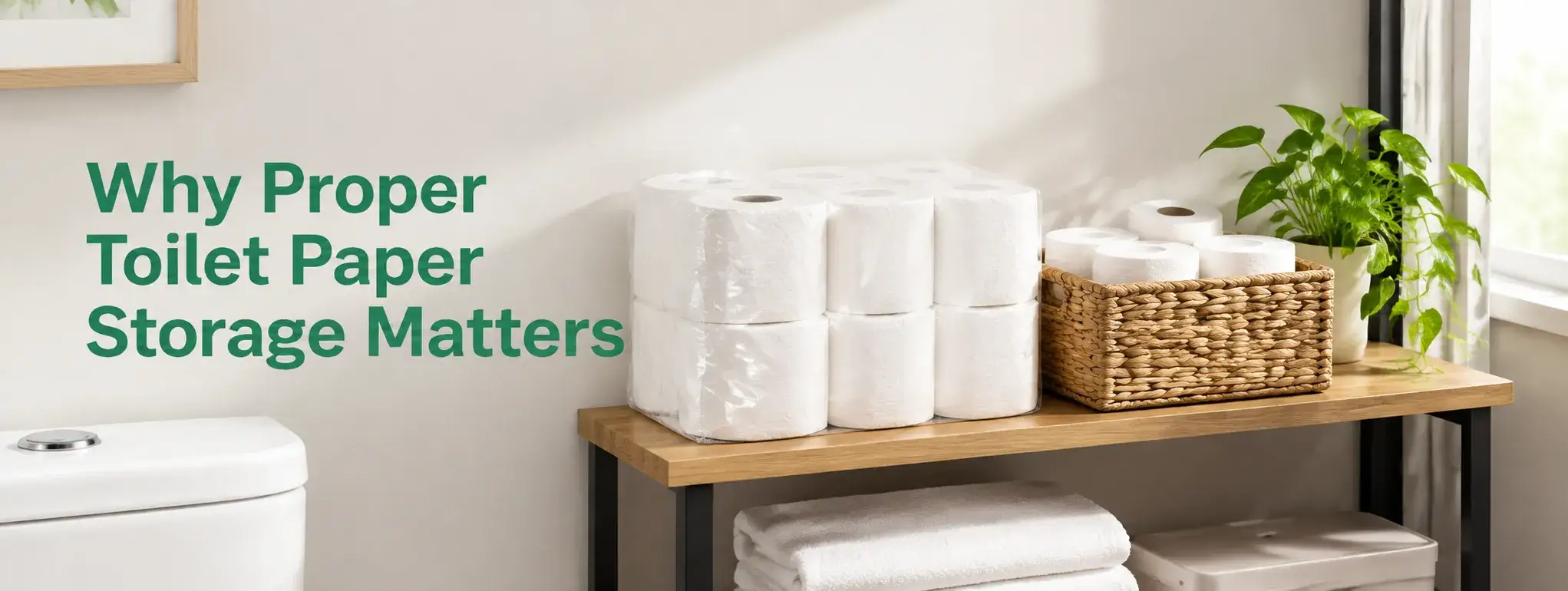
A protected storage system gives you better control over both product quality and inventory. Keep bulk toilet paper in its original sealed packaging whenever possible, and place the supply in a dry area with stable temperature and limited exposure to water vapor. For commercial facilities, labeled shelving and stock checks make it easier to identify older cartons before opening new ones.
Prerequisites: Tools And Materials Needed
You do not need complicated equipment to store toilet paper safely. The right materials depend on the size of your supply, the available space, and the humidity level in the room. Original manufacturer packaging is usually the first layer of protection because it helps limit exposure to moisture and airborne dust.
For open packs or storage areas with changing conditions, consider using:
- Airtight plastic storage bins with secure lids
- Heavy-duty resealable bags or moisture-resistant liners
- Clean shelves, pallets, or raised platforms
- Covered baskets for guest bathrooms and living areas
- Over-the-door racks or wall-mounted shelving
- Labels showing the purchase date or opening date
- Silica gel packs or other suitable moisture absorbers
- A compact dehumidifier for persistently damp rooms
- Disposable gloves for handling stock in commercial or healthcare settings
Choose containers that are clean, dry, and large enough to hold the rolls without crushing them. Do not place damp rolls inside a sealed container; sealing moisture in can make the problem worse. Dry the storage area and the products first, then repack them.
Step-By-Step Guide To Storing Toilet Paper
Step 1: Choose a Cool, Dry Storage Location
Place toilet paper in an interior closet, linen room, cabinet, or other area that remains dry throughout the day. The best location is away from showers, sinks, washing machines, exterior doors, leaking pipes, and windows that create condensation. Keep cartons elevated on shelving or a pallet rather than directly on concrete or tile floors.
The bathroom is acceptable for a small number of rolls used within a short period, but it is not usually the best location for bulk storage. Shower steam can raise humidity quickly, and splashes may reach exposed packaging. Basements and garages can also be unsuitable if they have condensation, temperature swings, flooding risks, or pests.
Check the location at different times, not only when it feels dry. A room may appear comfortable in the afternoon but become humid overnight or after laundry, bathing, or heavy rain. A basic humidity monitor can help you identify recurring problems and decide whether ventilation or dehumidification is needed.
Step 2: Keep Rolls Sealed in Original Packaging
The original plastic wrap helps shield toilet paper from everyday humidity, dust, odors, and accidental contact with water. Keep the package closed until you are ready to use the rolls. If you are managing several cases, open one package at a time instead of exposing the full supply at once.
When original packaging is torn or unavailable, use a clean airtight bin or a heavy-duty resealable bag. Repack the rolls only after checking that they are dry and free from visible contamination. Avoid using thin grocery bags that tear easily or containers that previously held chemicals, food with strong odors, or cleaning products.
Packaging protection is especially important in commercial settings. A sealed carton may remain suitable for longer than an open stack because fewer rolls are exposed to restroom air, cleaning chemicals, and frequent handling. Store opened packs inside a designated clean cabinet or supply room rather than beside sinks, toilets, or mop buckets.
Step 3: Implement an Efficient Storage System
An organized storage system protects rolls while making replenishment easier. Keep similar products together and separate standard toilet paper from jumbo rolls, commercial center-pull rolls, facial tissue, paper towels, and other paper products. Label shelves or bins so employees can identify the correct item without opening multiple cartons.
Use a first-in, first-out system: place newer stock behind older stock and use the older stock first. For a business, record delivery dates and check the supply during routine inventory inspections. For a home, you can use the same approach by placing newly purchased packs behind the existing supply.
In small spaces, vertical storage often works better than a large floor stack. Suitable options include:
- Wall-mounted shelves inside a linen closet
- Over-the-door racks for lightweight reserve stock
- Covered bins under a bed or on a high closet shelf
- A narrow cabinet beside the bathroom, away from splash zones
- Decorative lidded baskets for a guest area
Do not pack rolls so tightly that removing one disturbs the entire stack. Leave enough room to inspect packaging and maintain an orderly rotation.
Common Mistakes And How To Avoid Them
Even high-quality toilet paper can deteriorate when the storage environment is unsuitable. Most problems come from humidity, damaged packaging, poor placement, or failure to check older inventory. Correcting these habits usually costs less than replacing discarded stock.
| Common mistake | Better storage practice |
|---|---|
| Keeping bulk stock beside a shower or sink | Move reserve supply to a dry cabinet or linen closet |
| Removing plastic packaging before use | Keep packs sealed until needed |
| Placing cartons directly on the floor | Use shelves, pallets, or raised platforms |
| Stacking heavy boxes on top of toilet paper | Keep paper products free from compression |
| Mixing old and new cartons | Apply first in, first out rotation |
| Using a damp or dirty storage bin | Clean and dry the container before loading it |
| Ignoring torn or wet packaging | Inspect, isolate, and replace compromised stock |
| Storing paper beside chemicals | Use a separate, clean supply area |
Storing Toilet Paper in Humid Bathrooms
A few wrapped rolls can remain in a bathroom for daily convenience, but long-term bulk storage should be moved to a lower-humidity location. If bathroom storage is unavoidable, keep the rolls inside a closed cabinet or lidded container away from the shower, bathtub, toilet, and sink. Do not leave reserve packs on the floor.
Improve the environment by using the exhaust fan during and after showers, repairing leaks promptly, and allowing the room to dry. A covered container protects against splashes but cannot remove humidity from the air. If the packaging feels damp, develops condensation, or smells musty, move the supply and investigate the source of moisture.
Stacking Rolls Too Tightly
Tight stacking can distort rolls, tear packaging, and make it difficult to inspect or rotate inventory. The pressure may also interfere with dispensing, especially for commercial rolls designed for specific dispensers. Stack cartons on a stable surface and avoid placing heavy cleaning supplies, tools, or other boxes on top.
Use shelving that can support the total load without bending. Keep heavier cartons on lower shelves and lighter packs at a comfortable height. In a public facility, secure tall shelving where necessary and keep access paths clear for safe replenishment.
Ignoring Inventory Rotation
A large supply can remain forgotten at the back of a closet or storeroom. Without rotation, older packaging may be exposed to changing conditions for too long, while newly delivered stock gets used first. Mark cartons with the delivery date and make the oldest accessible from the front.
For a small business, a weekly or biweekly stock check may be enough. Larger facilities should include paper products in a routine purchasing and housekeeping checklist. Rotation does not mean toilet paper has a strict short expiration period; it means you are reducing unnecessary aging, packaging damage, and forgotten inventory.
Organizing Toilet Paper Without A Closet
You can store toilet paper neatly without a dedicated closet by using protected vertical and underused spaces. Choose a location that is accessible but not exposed to water. A lidded basket beside a vanity, a slim cabinet outside the bathroom, or a sealed bin under a bed can hold reserve rolls without leaving them in an open stack.
For a small bathroom, an over-the-door rack or narrow freestanding unit can keep a limited number of rolls within reach. Wall shelves are useful when installed away from the shower and positioned high enough to avoid splashing. If you use open baskets, place them in a dry room rather than assuming the basket itself will protect paper from humidity.
Good no-closet solutions include:
- Lidded decorative baskets in a guest room
- Stackable bins under a bed or stair storage area
- A slim rolling cart outside the bathroom
- An over-the-door organizer for short-term supply
- A wall shelf in a dry hallway or laundry area
- A closed cabinet with labeled sections for different paper products
Avoid storing toilet paper in cardboard boxes that sit on a damp floor. Cardboard absorbs moisture and can transfer it to the inner packaging. If you use a storage bench or cabinet, check the back and bottom regularly for condensation or leaks.
Maintaining Your Toilet Paper Supply Long-Term
Long-term maintenance starts with regular inspection. Check the storage room for dampness, musty odors, water stains, insects, rodents, torn plastic, crushed cartons, or visible discoloration. Inspect areas near plumbing, exterior walls, windows, and floors because these are common points of moisture entry.
Replace moisture absorbers according to the manufacturer’s instructions, and do not allow them to contact the paper directly if the packet becomes saturated. A dehumidifier may help in a consistently damp basement or utility room, but it should support—not replace—leak repairs and proper ventilation.
Use this basic maintenance schedule:
| Task | Suggested frequency |
|---|---|
| Check for leaks, condensation, and odors | Weekly in damp areas; monthly in dry areas |
| Rotate older stock to the front | Whenever new stock arrives |
| Inspect open packs and cartons | During each replenishment |
| Clean shelves and storage bins | Monthly or when visibly soiled |
| Review emergency or reserve stock | Monthly or according to facility policy |
If a roll is wet, moldy, heavily soiled, or affected by pests, do not use it. Isolate the damaged stock, identify the cause, clean the area safely, and replace the product. In a workplace, follow your facility’s hygiene and waste-handling procedures.
Conclusion
The most effective way to store toilet paper is to keep it sealed, dry, elevated, and organized. Avoid long-term storage in steamy bathrooms, damp basements, or garages with condensation. Use suitable bins or shelving, rotate older stock first, and inspect the area regularly for leaks, pests, damaged packaging, and musty odors.
If you are sourcing toilet paper for your home, business, hotel, office, or public facility, Yumero can help you review product formats, packaging needs, and supply requirements. Contact Yumero to discuss paper products that fit your storage conditions, dispensers, usage levels, and purchasing schedule.
Frequently Asked Questions
Does toilet paper expire?
Toilet paper does not usually have a fixed expiration date, but it can become unusable if exposed to moisture, pests, odors, dust, or contamination. Keep it sealed and dry, then rotate older stock first.
Is it better to store toilet paper in the bathroom or garage?
Neither location is automatically ideal. A bathroom may have excessive steam, while a garage may have condensation, pests, or temperature changes. Choose whichever area is cleaner, drier, and more stable, and keep the supply sealed and elevated.
Can toilet paper get moldy?
Yes. Toilet paper can develop mold when it stays damp or is exposed to persistent high humidity. Discard visibly moldy or musty rolls and correct the moisture problem before storing new stock.
How long can toilet paper be stored?
Dry, sealed toilet paper can generally be stored for a long time because paper products do not spoil like food. The practical storage period depends on packaging condition and the environment. Inspect older stock before use and discard anything wet, contaminated, pest-damaged, or unusually odorous.
Should toilet paper be stored off the floor?
Yes. Raised storage protects cartons from spills, floor moisture, leaks, and pests. Use shelving, a pallet, or another clean elevated surface, especially in basements, garages, storerooms, and commercial supply rooms.
Can toilet paper be stored under the sink?
It can be stored under a sink only if the cabinet is dry, clean, and free from plumbing leaks. Keep rolls inside sealed packaging or a lidded bin, and remove them if condensation or a leak develops.
How do you store toilet paper in a small bathroom?
Keep only a short-term supply in the bathroom and store the bulk elsewhere when possible. Use a closed cabinet, lidded basket, over-the-door rack, or slim organizer positioned away from shower steam and splashes.
Is it safe to store toilet paper next to cleaning products?
It is better to keep paper products in a separate clean area. Cleaning chemicals can leak, release strong odors, or contaminate packaging. If shared storage is unavoidable, use separate closed sections and keep chemicals below and away from paper products.
How should businesses store bulk toilet paper?
Businesses should keep bulk toilet paper in a clean, dry, ventilated supply room on labeled shelving or pallets. Maintain sealed cartons, separate different roll formats, rotate stock by delivery date, and inspect the area as part of routine housekeeping and inventory checks.